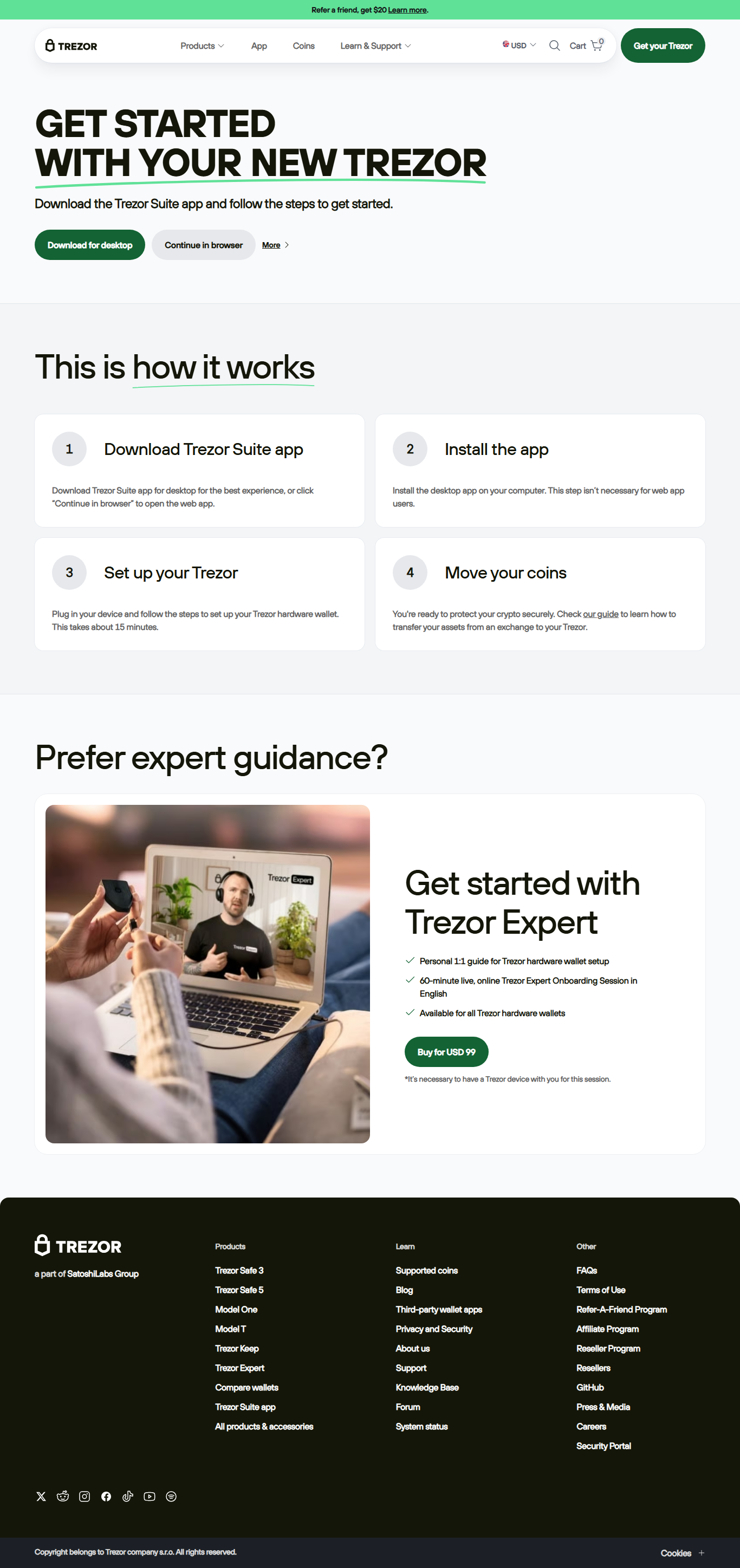
Getting Started with Trezor: A Complete Guide to Trezor.io/start
Cryptocurrency has moved from niche tech circles into mainstream finance. With this rise, the importance of securing your digital assets has become paramount. Hardware wallets, like Trezor, provide a robust solution for securely managing cryptocurrencies. For beginners and intermediate users, the first step is often visiting Trezor.io/start, the gateway to setting up and understanding your Trezor wallet.
This guide walks you through everything you need to know about getting started with Trezor, understanding the Trezor Suite, managing your crypto safely, and exploring features beyond the basics.
What is Trezor?
Trezor is a hardware wallet designed to securely store cryptocurrencies offline, protecting them from online threats like hacking or phishing. Unlike software wallets, which live on your computer or smartphone, Trezor devices keep your private keys isolated, making it nearly impossible for attackers to access your funds remotely.
The Core Benefits of Trezor
- Security: Private keys never leave the device, ensuring strong protection against hacks.
- User-Friendly Interface: Intuitive setup and Trezor Suite make managing crypto straightforward.
- Support for Multiple Coins: Trezor supports hundreds of cryptocurrencies, including Bitcoin, Ethereum, and more.
- Backup and Recovery: Easy recovery using a 24-word recovery seed.
Why Trezor is Ideal for Beginners
Many new crypto users are intimidated by the complexity of securing their assets. Trezor simplifies this by providing a device that is easy to set up, paired with clear instructions at Trezor.io/start. Beginners can feel confident knowing their crypto is offline and protected while learning the nuances of wallet management gradually.
Getting Started with Trezor.io/start
The journey to secure your crypto begins at Trezor.io/start. This webpage acts as a comprehensive guide to setting up your Trezor hardware wallet. Whether you have Trezor One or Trezor Model T, the instructions are clear and beginner-friendly.
Step 1: Unbox and Inspect Your Device
After purchasing your Trezor wallet, carefully unbox it and verify the tamper-evident seal. Ensuring your device hasn’t been tampered with is crucial for security.
Step 2: Connect to Your Computer
Use the USB cable provided to connect your Trezor device. Visit Trezor.io/start on a secure computer and follow the instructions to install Trezor Suite.
Step 3: Install Trezor Suite
Trezor Suite is the official software for managing your wallet. It provides an interface to send, receive, and store cryptocurrencies safely. The software is available for desktop and web, ensuring you can manage your crypto easily from your preferred device.
Step 4: Create a New Wallet
Once Trezor Suite is installed, you can create a new wallet. The device will generate a unique recovery seed—a set of 24 words. Write these down on the provided recovery card and store it securely. Never store your recovery seed digitally or share it with anyone, as it grants full access to your funds.
Step 5: Explore Trezor Suite Features
After setup, Trezor Suite provides access to:
- Portfolio overview: See all your crypto holdings at a glance.
- Transaction history: Track and manage incoming and outgoing funds.
- Coin management: Add or remove supported cryptocurrencies.
- Security settings: Configure PIN, passphrase, and recovery options.
Understanding the Trezor Wallet Ecosystem
Trezor isn’t just a hardware device; it’s part of a larger ecosystem that supports your crypto journey. Understanding this ecosystem is key to becoming a proficient crypto user.
Trezor Suite
Trezor Suite is more than just a dashboard—it’s the heart of your wallet experience. Here, you can:
- Send and receive cryptocurrencies safely.
- Monitor portfolio performance in real-time.
- Exchange supported coins through integrated exchanges.
- Enable enhanced security features like passphrase-protected wallets.
Trezor Login and Account Management
While Trezor doesn’t require an account in the traditional sense, connecting to Trezor Suite acts as a secure login system. Each time you connect your device, you authenticate using your PIN and optional passphrase. This ensures that even if someone gains access to your computer, they cannot access your wallet without your physical device and credentials.
Compatibility with Other Crypto Platforms
Trezor devices are compatible with many third-party platforms like Ethereum wallets, Bitcoin wallets, and other crypto management tools. This flexibility allows users to expand their crypto strategies while keeping security as the top priority.
Security Best Practices for Trezor Users
Even with a hardware wallet, users must follow security best practices to ensure their funds remain safe. Here are essential tips:
1. Keep Your Recovery Seed Safe
Store the 24-word recovery seed offline in a secure location. Consider using a fireproof and waterproof safe or splitting it across multiple secure locations. Never store it digitally or share it with anyone.
2. Enable a Strong PIN
Your Trezor device uses a PIN code for access. Choose a PIN that is difficult to guess, avoiding birthdays or sequential numbers. Trezor will randomly shuffle the PIN entry layout to prevent keylogging attacks.
3. Consider Passphrase Protection
For added security, Trezor allows an optional passphrase. Think of it as an extra word or phrase that creates a hidden wallet within your device. Even if someone steals your Trezor, they cannot access wallets protected by an unknown passphrase.
4. Regularly Update Firmware
Trezor releases firmware updates to improve security and functionality. Always update your device when prompted to protect against potential vulnerabilities.
5. Beware of Phishing Attacks
Always ensure you access Trezor.io/start directly through a browser and not via email links. Phishing attacks may attempt to trick users into revealing recovery seeds or PIN codes.
Advanced Tips for Intermediate Users
Once you are comfortable with basic wallet management, Trezor offers several advanced features for users seeking more control over their crypto holdings.
Passphrase Wallets for Multi-Layer Security
Advanced users can create multiple wallets using passphrases. Each passphrase generates a completely separate wallet, adding another layer of security and privacy. This feature is particularly useful for users holding large amounts of cryptocurrency or managing multiple portfolios.
Integration with DeFi and Web3 Applications
Trezor devices can interact with decentralized finance (DeFi) applications and Web3 platforms. By connecting through compatible wallets, users can stake tokens, interact with smart contracts, and participate in decentralized exchanges while keeping private keys offline.
Customizing Transaction Fees
Intermediate users can manually set transaction fees in Trezor Suite for networks like Bitcoin and Ethereum. This allows for better control over transaction speed and cost efficiency, especially during periods of network congestion.
Portfolio Diversification and Multi-Coin Management
Trezor supports hundreds of cryptocurrencies, making it easy to diversify your portfolio. Users can store multiple coins securely on a single device, reducing the need for multiple wallets and simplifying asset management.
Why Choose Trezor over Other Wallets?
While there are many hardware and software wallets available, Trezor stands out due to its long-standing reputation, user-friendly interface, and robust security features. Key reasons include:
- Open-source firmware for transparency and security auditing.
- Support for a wide range of cryptocurrencies.
- Seamless integration with Trezor Suite for portfolio management.
- Strong focus on user education through resources like Trezor.io/start.
For both beginners and intermediate users, Trezor strikes the right balance between ease-of-use and advanced functionality, making it a top choice in the hardware wallet space.
Frequently Asked Questions (FAQ)
1. Is Trezor.io/start free to use?
Yes, accessing Trezor.io/start and using Trezor Suite is completely free. You only need to purchase the Trezor hardware device itself.
2. Can I recover my wallet if I lose my Trezor device?
Yes. By using the 24-word recovery seed generated during setup, you can recover your wallet on a new Trezor device or compatible hardware wallet.
3. Is Trezor compatible with mobile devices?
Yes, Trezor Suite can be accessed via mobile browsers and some mobile apps, but for the best experience, desktop usage is recommended.
4. Can I use Trezor with multiple cryptocurrencies at once?
Absolutely. Trezor supports hundreds of coins, and you can manage multiple cryptocurrencies from a single device via Trezor Suite.
5. What should I do if I forget my PIN?
If you forget your Trezor PIN, you can reset the device and recover your wallet using the 24-word recovery seed. Always keep the seed safe to avoid permanent loss of funds.